All standard result-analysis tools (see the Results output section) are available for the Longitudinal rolling module. This section introduces specialized analysis tools, shows examples of defects in longitudinal rolling processes, and explains how to detect them.

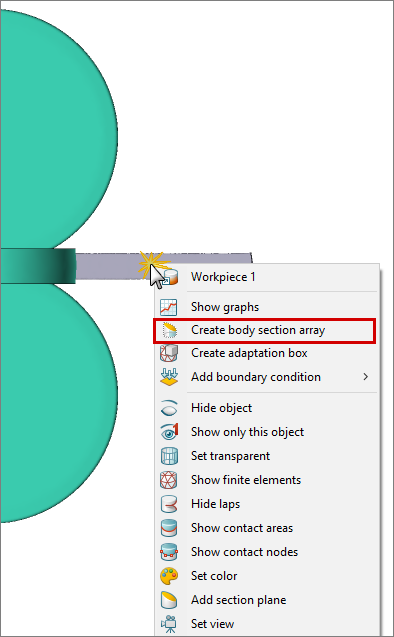
Automatic creation of a section arrayA distinctive feature of the rolling modules is the automatic creation of a section array. Select the workpiece and do right-click to open the dialog window. Then choose Create body section array.
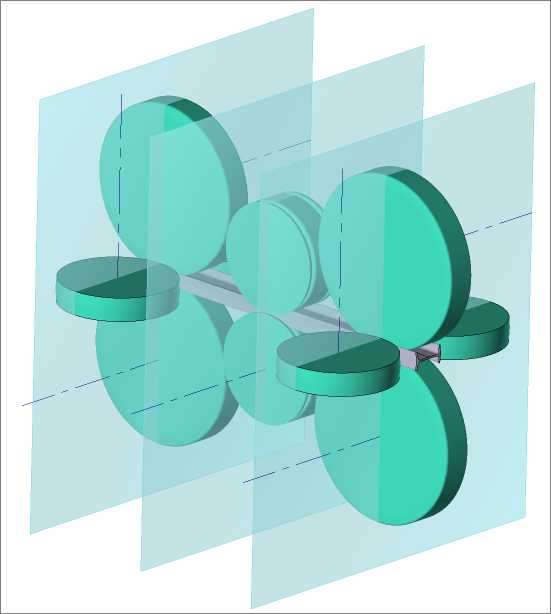
Section planes passing through the axes of all roll pairs are generated automatically.
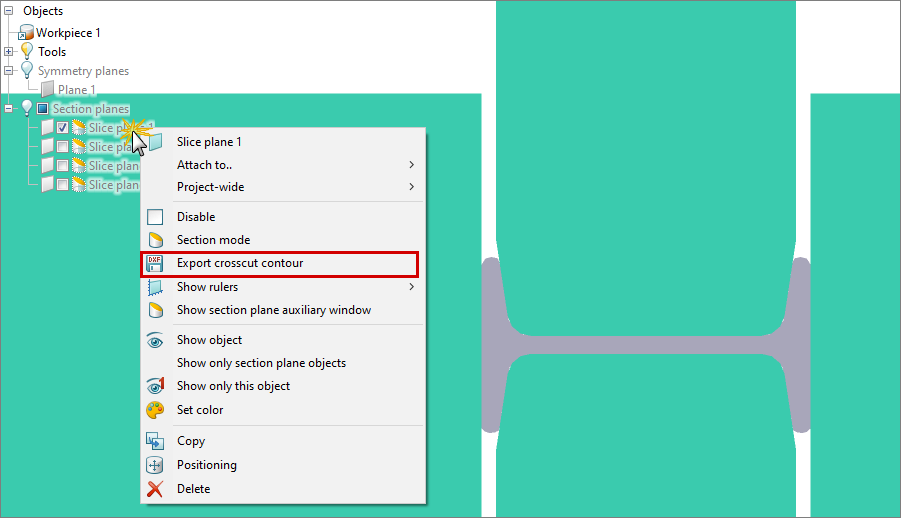
Groove filling analysisTo analyze the filling of a specific groove, activate the corresponding section plane. Using the standard set of tools in QForm UK, it is possible to measure the resulting section. The section contour can also be exported in DXF format.
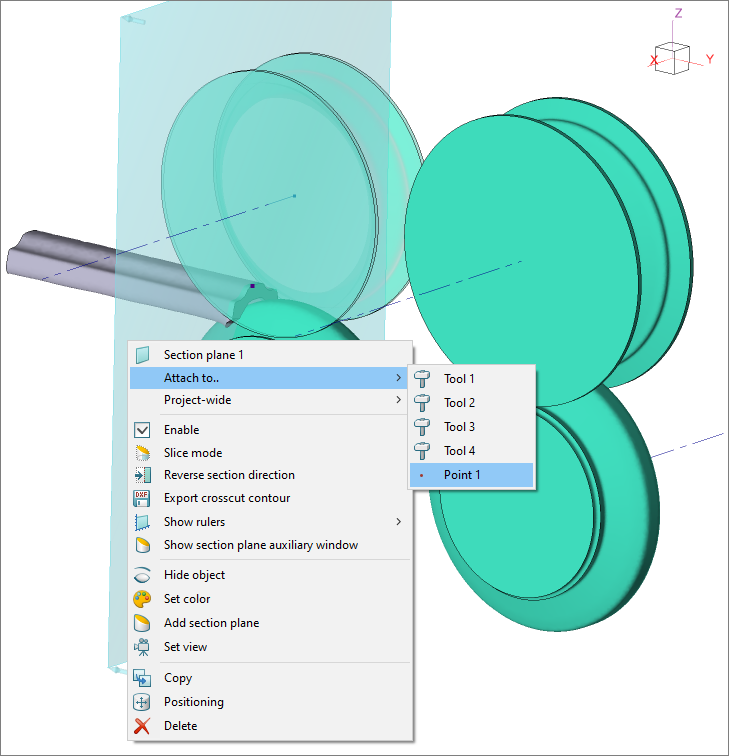
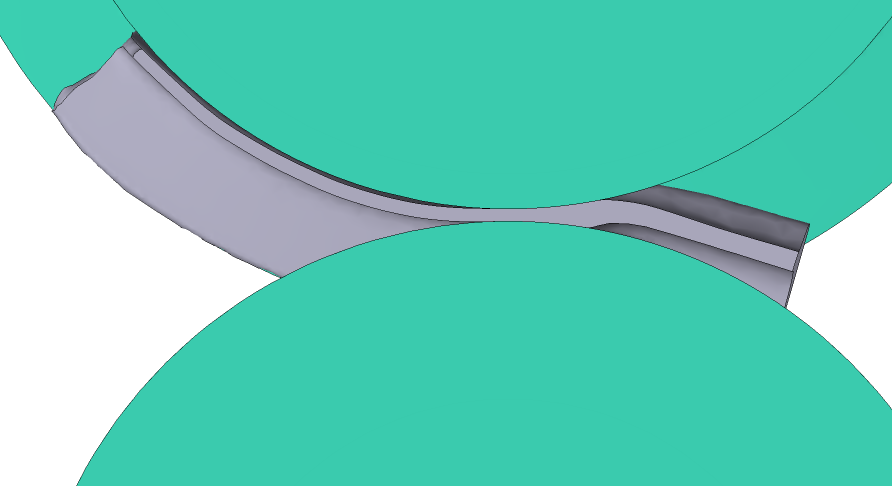
Feedstock bite analysisIn longitudinal rolling the feedstock bite by the rolls must be monitored; QForm UKprovides a Dynamic section plane for this purpose. To assess the strip bite, perform the following steps: 1. Create a section plane perpendicular to the rolling direction; 2. Position the section plane near the front end of the workpiece; 3. Add a tracking point on the workpiece; 4. Right-click the section plane, choose Attach to …, and select the created point; 5. Execute Tracking.
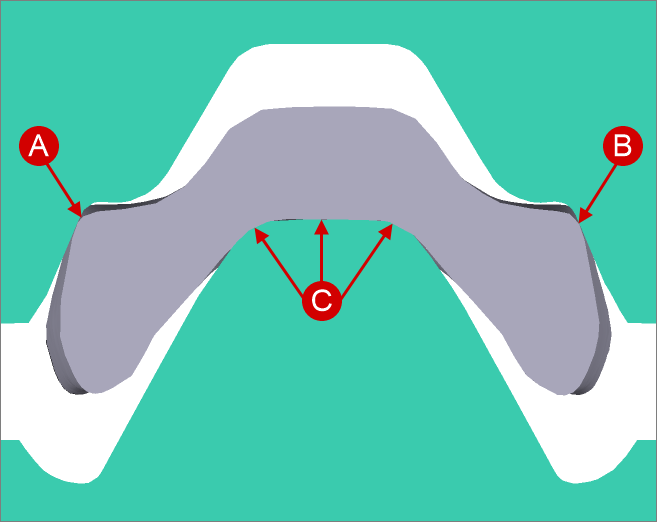
You can attach the section plane to an already tracked point or attach it first and then run tracking. After tracking, the section plane will follow the movement of the tracked point. To analyse the bite, activate the section plane and set the simulation step at which the workpiece first contacts the rolls.
|
In the longitudinal rolling process it is important to monitor several parameters, such as rolling force and rolling torque, strip temperature, and contact area. •Force and torque can be viewed on the corresponding graphs on the tool (see the Graphs output section)
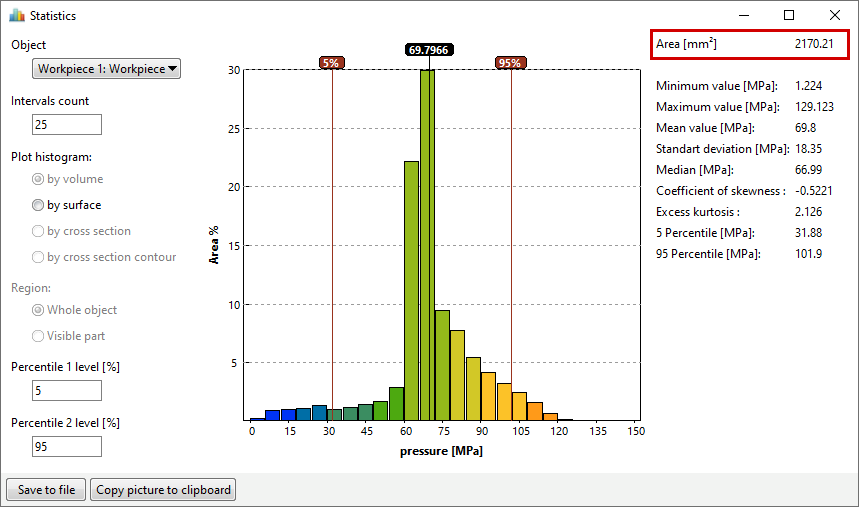
•To analyse temperature, use the Temperature field. Temperature values can be viewed both on the strip surface and in a section (see the Output fields section). •To analyse the contact area, run the Pressure subroutine With the pressure or friction field active, the contact area is shown on the Statistics tab.
|
||||||||||||||||||||
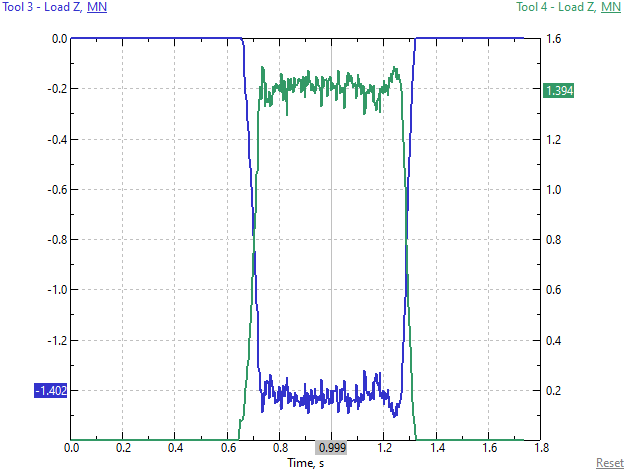


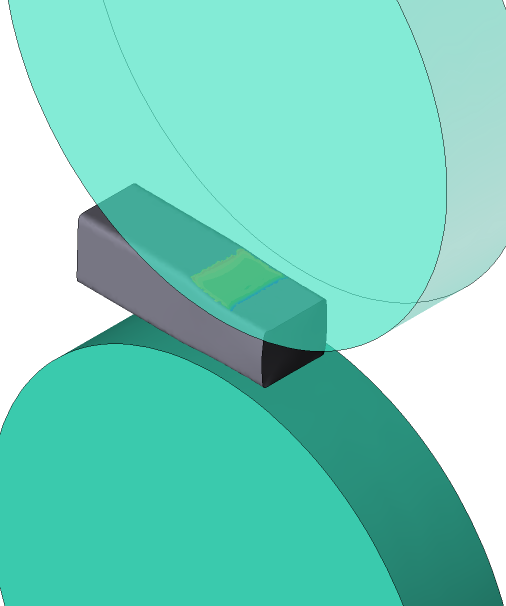
In longitudinal rolling processes, QForm UK allows the detection of the following common defects: roll scabs, waviness, underfilling and overfilling of the groove, and mismatch of reduction and roll speeds in neighbouring stands, which helps predict strip cobbling. Surface defects can be detected using the standard Surface flow analysis subroutine.
|
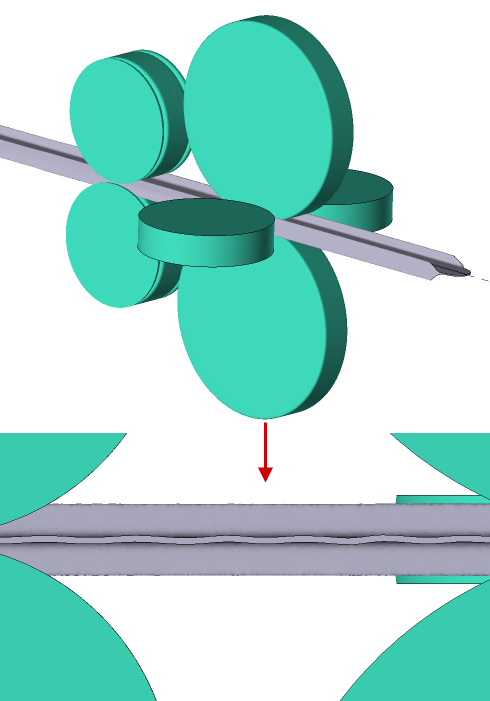
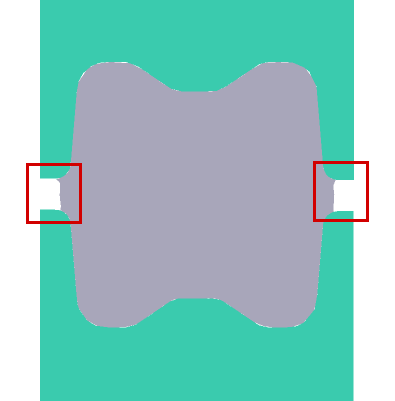

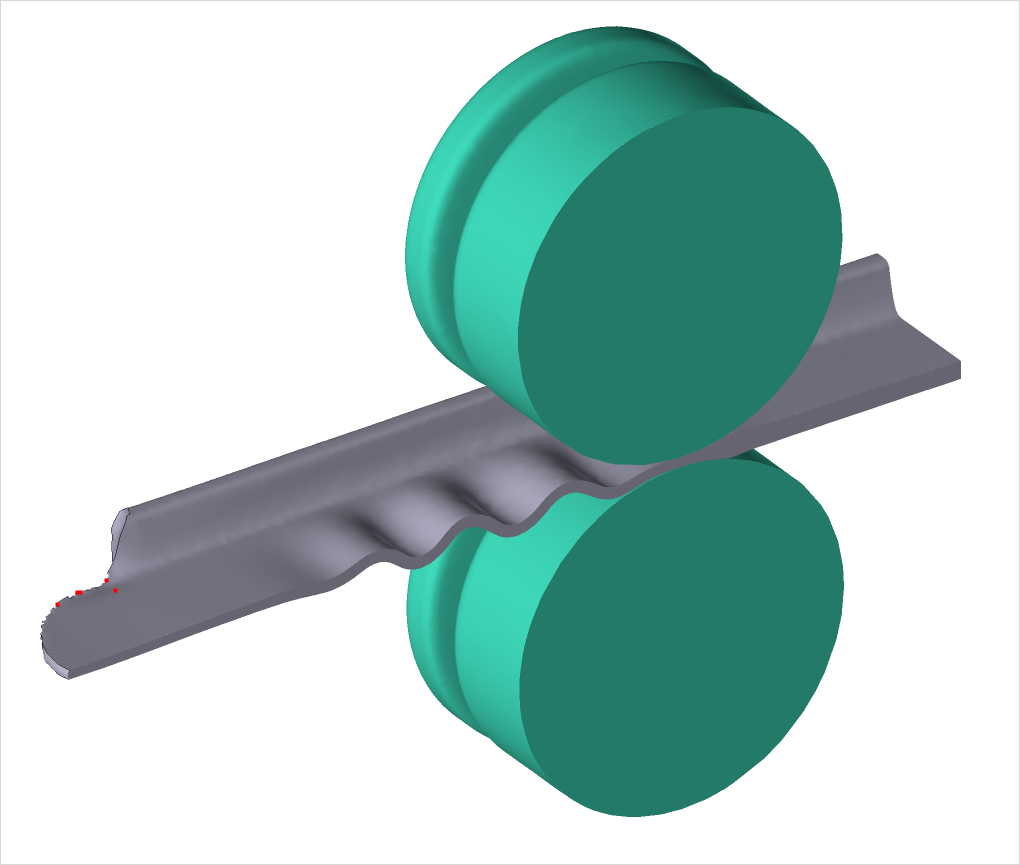
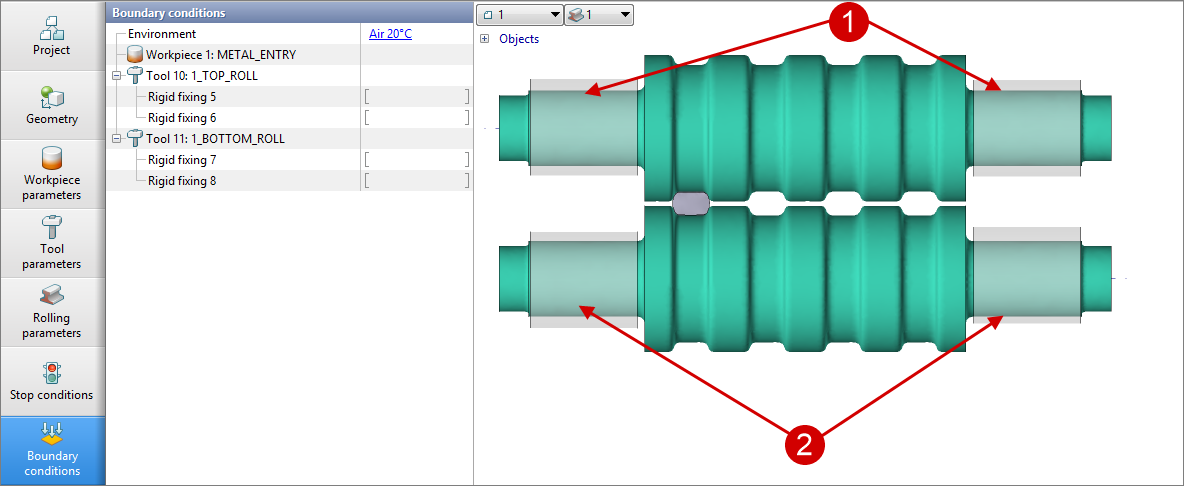
Roll strength analysis is comparable to the approaches used for calculating die strength in hot forging. The main idea is to analyze the stress distribution in the tool. The effective stress is compared with the yield strength of the roll material. Exceeding the yield strength value indicates the start of plastic deformation and defect formation. Average tensile stresses combined with high effective stress in a local area indicate the probability of crack initiation or its formation after a certain number of cycles. Recommended procedure for roll stress analysis: Before performing the simulation, it is necessary to set the boundary conditions (see Boundary Conditions section). The roll fixation scheme is determined by the stand design. The most common option is adding fixings to the roll neck.
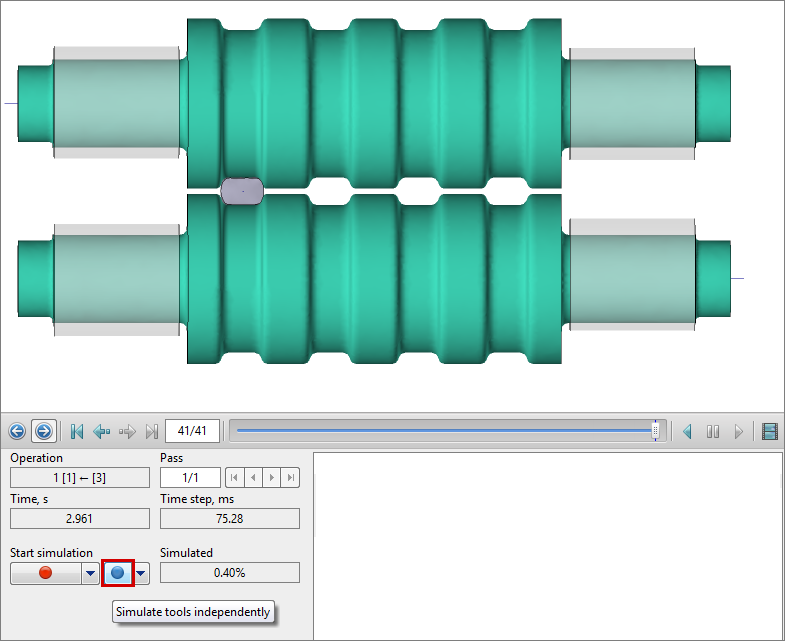
After fixings, at the postprocessor stage, perform Simulate tools independently. In this setup, the force from the workpiece is applied to the contact surface area of the roll.
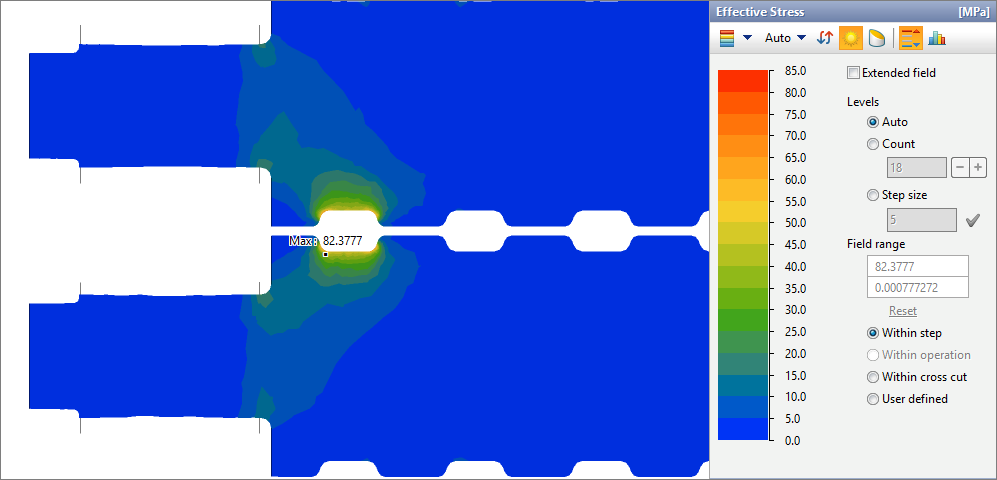
After the simulation is completed, the tool fields become available, and a marker appears on the result playback scale indicating the step at which the simulation was performed. Next, it is necessary to compare the maximum effective stress with the yield stress of the material and pay attention to areas with mean tensile stress.
The maximum effective stress is localized at the fillet radius in the groove bottom area and amounts to 82 MPa, which is significantly lower than the yield stress of this material. |
||||||||||