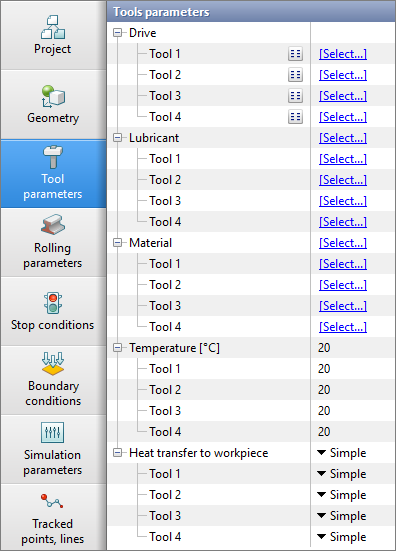
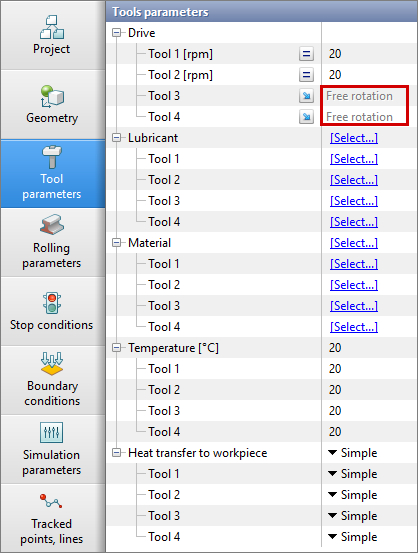
In the tab Tools parameters are set: Drive, Lubricant, Material, Temperature and Heat transfer to workpiece.

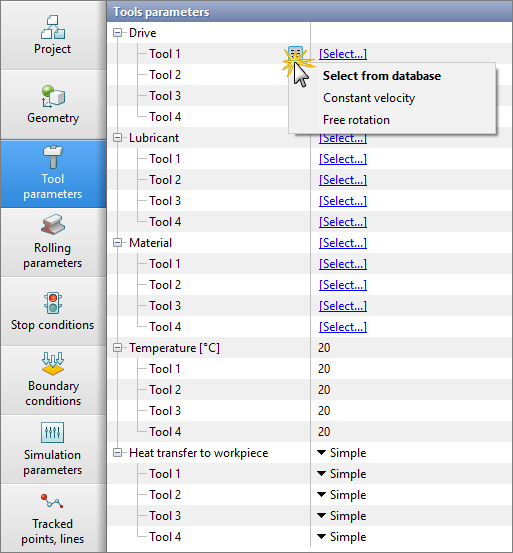
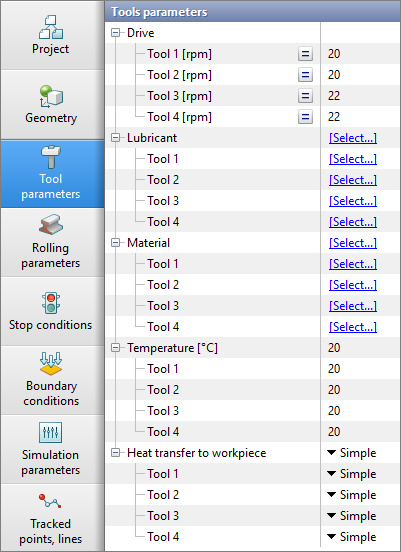
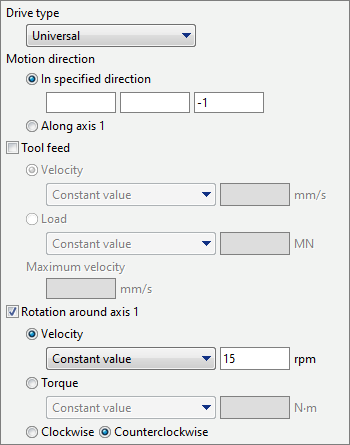
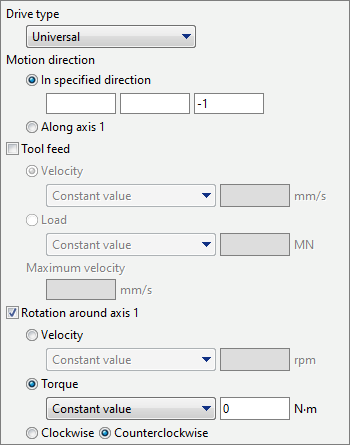
The program allows the following drive types for tools: •Constant velocity - during the simulation process, the tool rotates at a set velocity. The rotation direction is determined automatically. •Free rotation - to specify a non-driven roll. The tool starts rotating from contact with the workpiece; •Select from database - used to assign a drive manually created based on the Universal or to select a Fixed drive for custom giudes. To select the drive type, click the icon next to the tooll.
Then Select from database, set Constant velocity or assign Free rotation.
|
||||||||||||||||

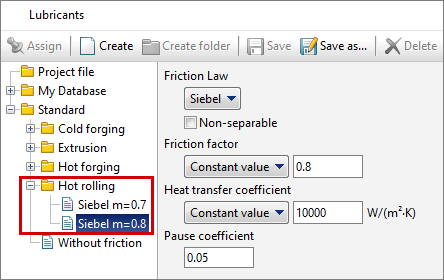
For hot rolling, two lubricants are available in the Lubricant Database.
The lubricants differ in their friction coefficient values. Lubricants parameters are selected based on comparison between simulation results and real test data. An optimal friction model is law Siebel, with a friction factor between 0.7 and 1, depending on the technology. However, results may vary within this range and the provided average values may not be suitable for a specific process. It is best to test several processes with known practical results and compare them to simulation results at different friction factor values. Several criteria for comparing practical results and simulation results: •you can compare the сross-section shape (overall dimensions or cross cut plane shape); •you can compare the time of the process; •you can compare сalculated or measured workpiece rolling speed •you can compare the moments and load on the rolls. . |
•Material. Tools material is assigned by button [Select...] and is selected from Tool materials database;
•Temperature It is recommended to set the average temperature of the rolls for steady-state rolling;
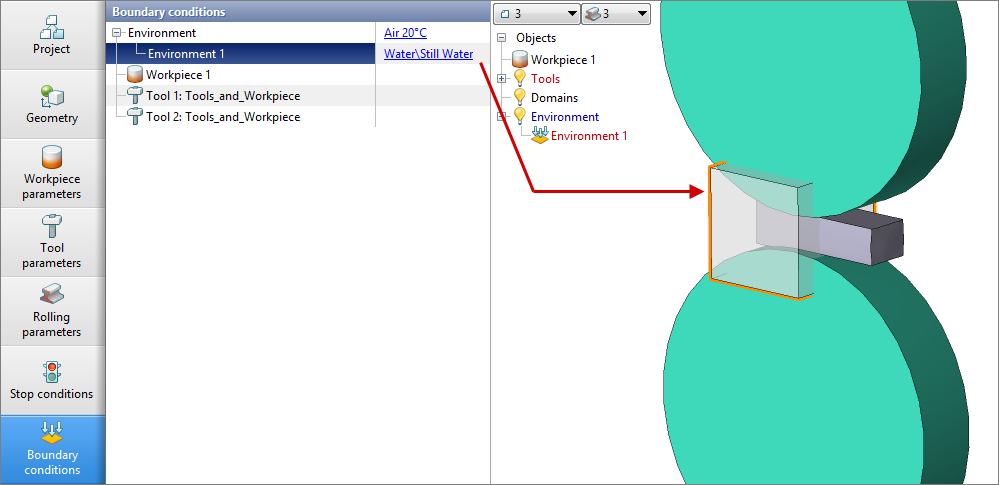
•Heat transfer to workpiece. All types of Heat transfer to workpiece are available in rolling modules, except for coupled. For steady-state rolling, Constant temperature is recommended. If using Simple heat transfer, it is recommended to addadditional environment areato simulate water cooling of the rolls.
|
An additional environment domain with specified water properties has been added. |