Прямые фазовые переходы создаются автоматически при редактировании древовидной структуры Фазовый состав на вкладке Свойства. При необходимости рассчитывать обратные фазовые превращения, пользователь может добавить их вручную на вкладке Фазовые переходы. Для этого требуется выбрать для превращения исходную фазу и фазу-продукт превращения (дочернюю) и нажать на кнопку Добавить превращение.
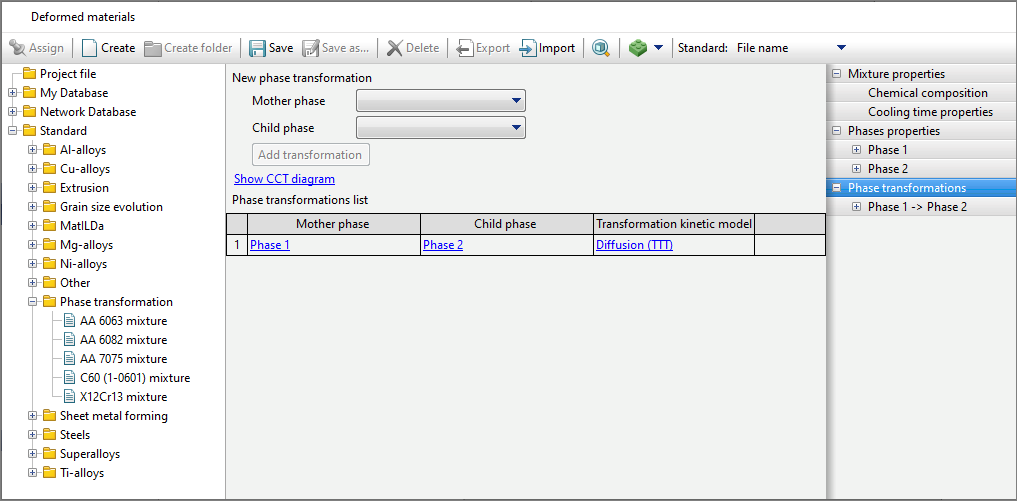
phase transformations added in this way can be delete. Phase transformations, uniquely defined by a tree structure Phase composition tab Properties cannot be delete without a corresponding change in the structure.
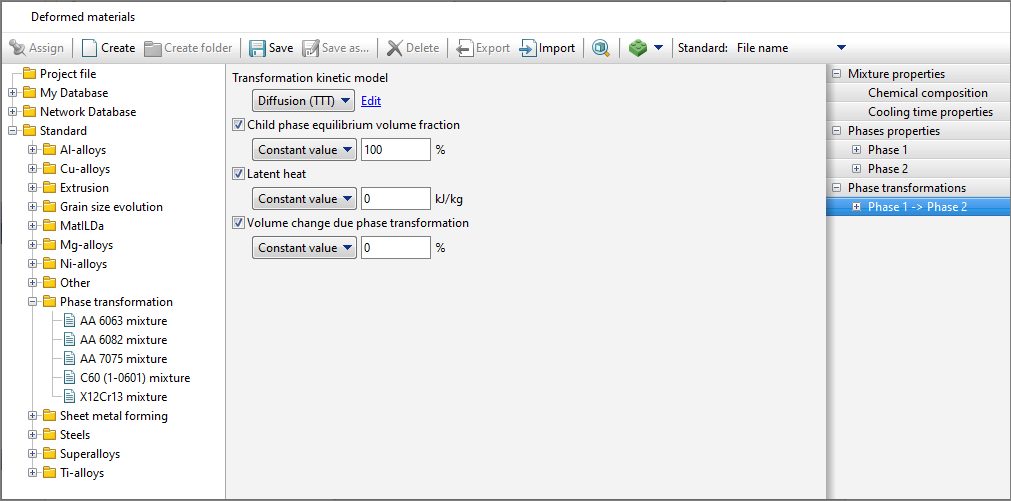
For each phase transformation it is required to set:
•Phase transition kinetics;
•The equilibrium volume phase vol. fraction;
•Latent heat of phase transformation;
•Volume change during phase transformation.

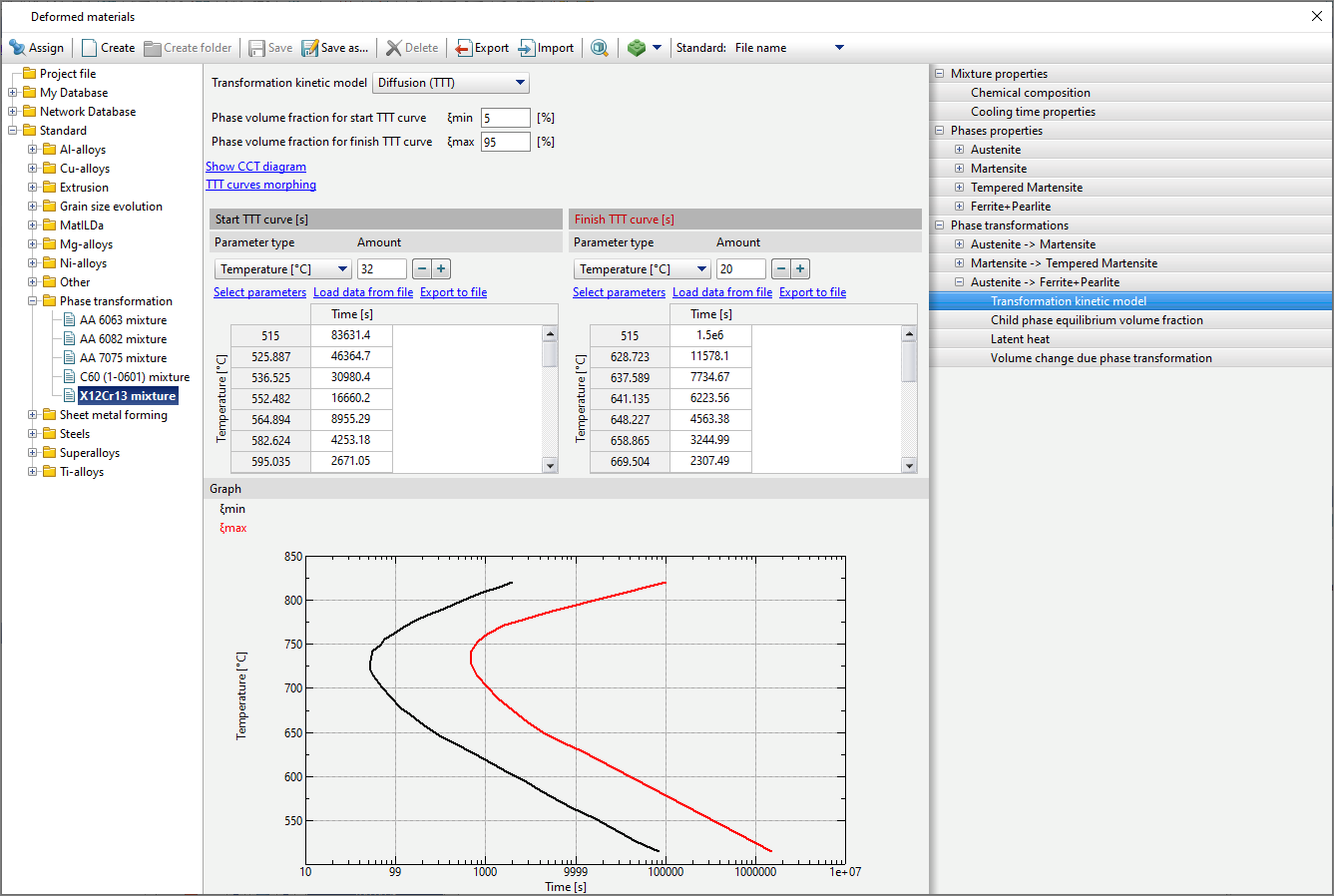
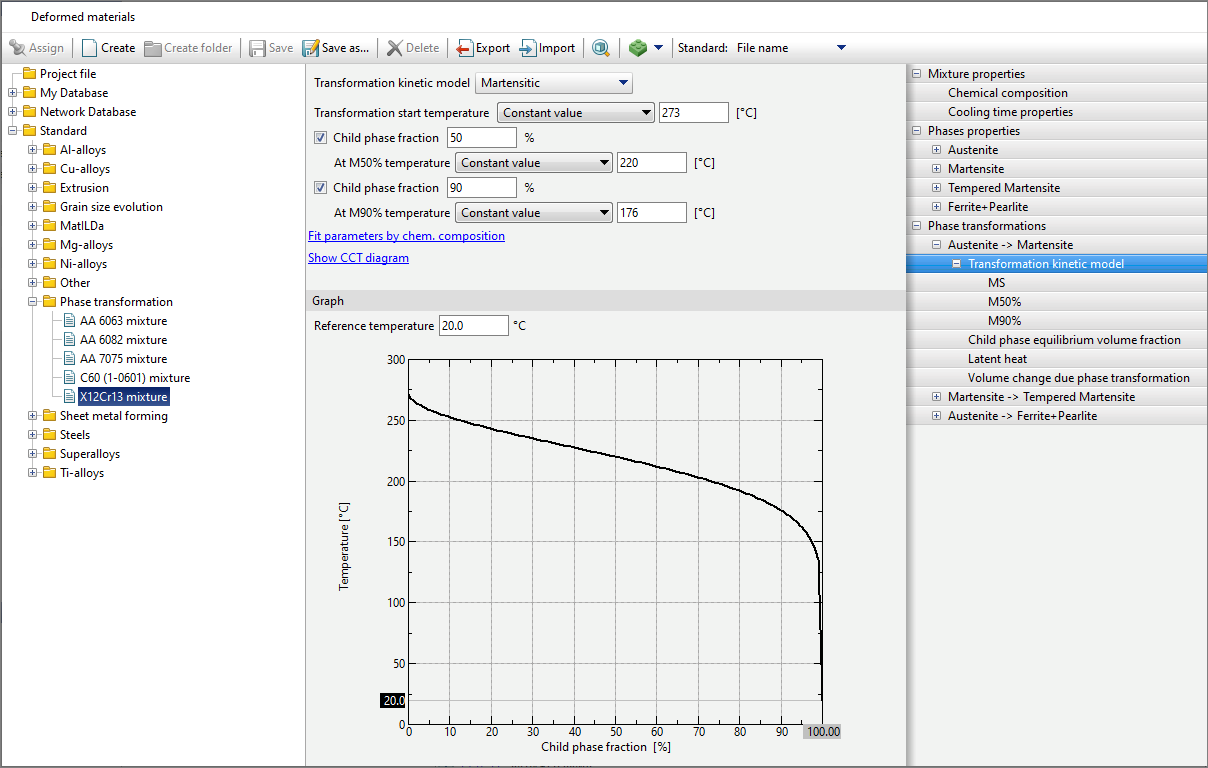
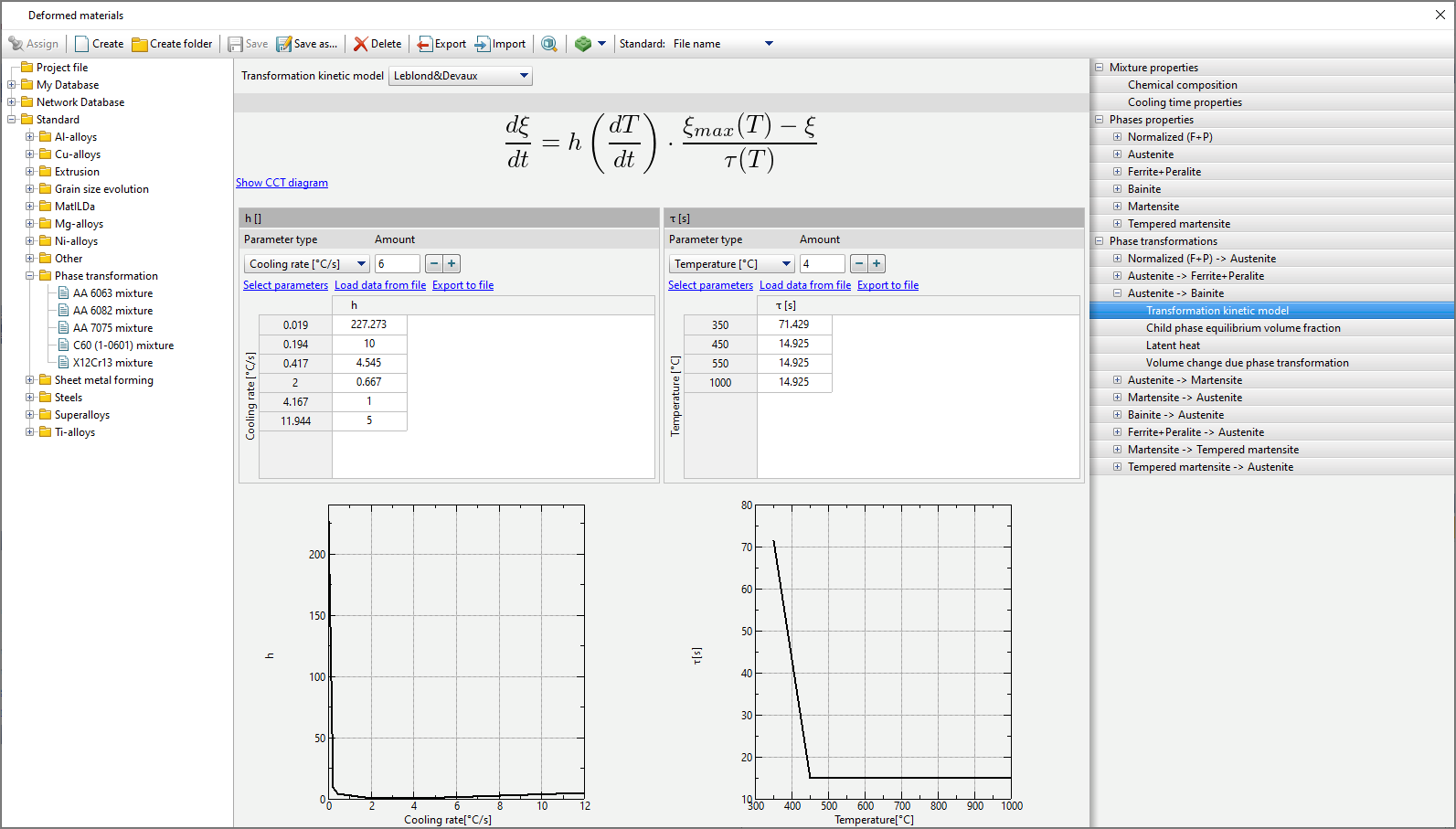
QForm UK позволяет моделировать как диффузионные, так и мартенситные фазовые превращения по различным моделям.
|
||||||||||||

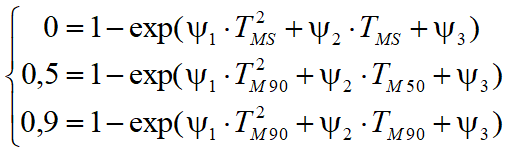

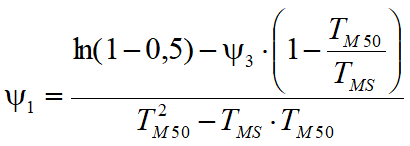
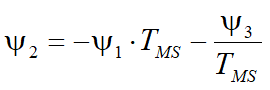
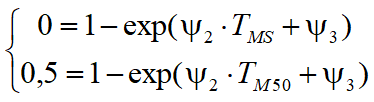
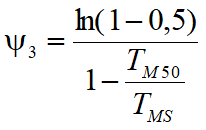
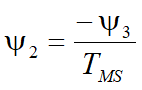


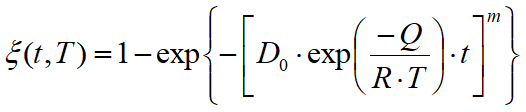
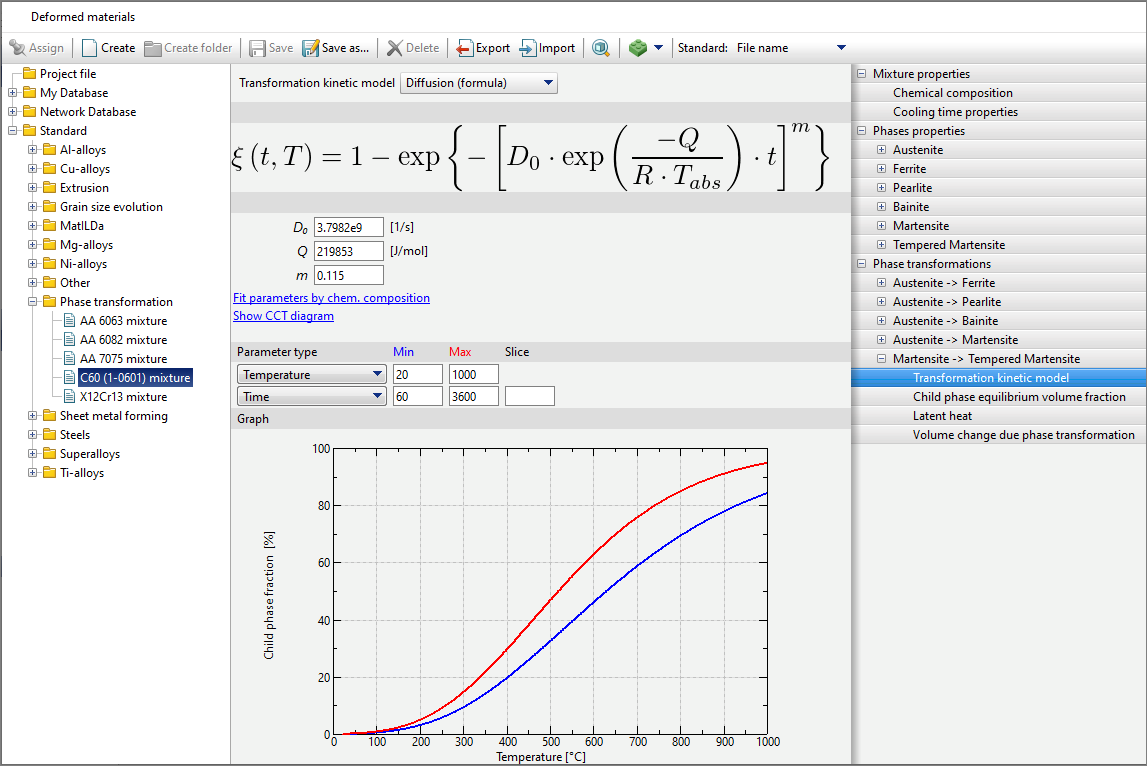
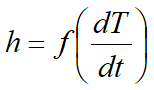
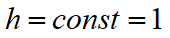
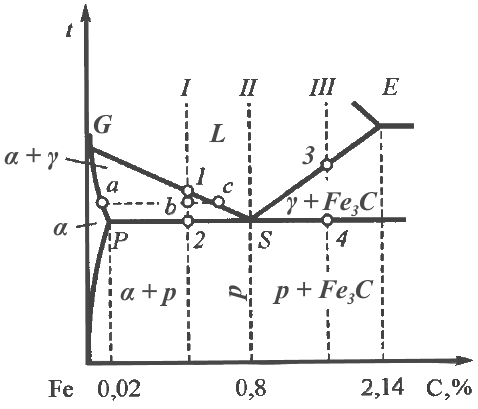
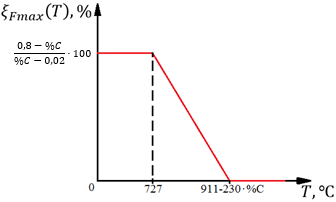
The equilibrium volume phase vol. fraction shows what is the maximum volume fraction of the daughter phase that can exist at a given temperature. As a rule, if steel quenching is simulated and the transformation kinetic model is different from Leblonde-Devaux, then for all phases except ferrite , the equilibrium volume phase vol. fraction is set equal to 100%. Для нелегированных углеродистых сталей зависимость равновесной объемной доли феррита может быть определена из диаграммы «Железо-цементит» как отношение длин отрезков
Taking into account the position of the points P, S And G, dependence of the maximum volume fraction of ferrite on the carbon content C[%] and temperature T[oC] can be represented by a graph.
|


Latent heat of phase transformation is the amount of heat that is released during the complete transformation of a unit mass of the initial phase into the child phase . Unit of measurements - kJ/kg. It can be specified as a constant or table function of temperature. If heat is absorbed process the transformation, then latent heat must be specified with a minus sign. |
Shows by what percentage the volume will increase with the complete conversion of the initial phase into the child phase of the transformation. Can be set to constant or table function of temperature. If the volume decreases process the transformation, then the parameter value must be given with a minus sign. |